James Hardie vs. vinyl siding in Georgia: cost, durability, and the honest verdict
Vinyl wins on upfront price. Fiber cement wins on longevity, fire and resale. Here is how the two really compare on a North Atlanta home — without the sales spin.
James Hardie vs. vinyl siding: the head-to-head
If you are replacing siding in North Atlanta, the first fork in the road is almost always vinyl versus James Hardie fiber cement. Both are legitimate choices, and the right answer depends on your priorities: lowest upfront cost, or longest life and best resale. This guide lays out the real trade-offs — price, durability, maintenance, fire and value — so you can decide with your eyes open.
Want a recommendation for your home and budget? Get a free assessment →
Not sure which fits your budget and how long you’ll own the home? We’ll give you a straight answer. Get my free assessment
| Factor | James Hardie (fiber cement) | Vinyl |
|---|---|---|
| Installed cost | ~$10–$15 / sq ft | ~$2–$5 / sq ft |
| Lifespan | 30–50+ years | 20–40 years |
| Fire | Non-combustible (Class A) | Combustible; can melt |
| Moisture & pests | Resists rot; not a pest food source | Resists moisture; can trap it if damaged |
| Heat & warping | Dimensionally stable | Can warp or fade in intense sun |
| Maintenance | Periodic repaint (or long-lasting ColorPlus) | Rinse with a hose; color molded in |
| Resale signal | Premium | Often reads builder-grade |
Cost: upfront vs. lifetime
There is no honest way around it: vinyl is cheaper to install. A vinyl job on a 2,000 sq ft home might run in the low-to-mid five figures, while James Hardie on the same home typically lands higher. But the sticker price is only half the story. Spread across a 30-to-50-year fiber cement lifespan — versus replacing or heavily maintaining vinyl sooner — the annual cost of ownership narrows considerably, and the resale premium tilts it further. If you plan to own the home a long time, the “expensive” option is often the cheaper one per year.
Durability in the Georgia climate
This is where fiber cement earns its price. Georgia’s heat, humidity, heavy rain and storm season are exactly the conditions that shorten vinyl’s life — warping in intense sun, cracking in cold snaps, and trapping moisture if it is damaged. James Hardie is largely inorganic, dimensionally stable in heat, non-combustible, and not a food source for termites or woodpeckers. Its HardieZone HZ10 line is engineered specifically for the humid South.
Myth All siding performs about the same once it is up on the wall. Fact Material matters most over decades. In Georgia’s climate, fiber cement’s stability and fire resistance separate it from vinyl.
Where vinyl genuinely wins
An honest comparison names vinyl’s strengths. It is the clear value choice on upfront cost. Its color is molded through the panel, so it never needs repainting and will not show chips the way a scratched painted surface can. And maintenance is about as easy as it gets — a rinse with a garden hose. For a rental, a shorter ownership horizon, or a tight budget, vinyl is a perfectly rational pick.
Whichever way you lean, we’ll quote the fiber cement option in writing so you can compare apples to apples. Talk to a specialist
Resale, appraisal and curb appeal
In North Atlanta’s mid-to-upper price bands, siding is part of how a home is judged. Fiber cement reads as a premium, low-maintenance exterior, while aging or builder-grade vinyl can weigh on perceived value. If resale is on your horizon — even years out — the material you choose today shapes the impression your home makes later. For homeowners committed to Hardie, our Marietta cost guide breaks down the numbers.
So which should you choose?
Strip away the brand loyalty and the decision comes down to two honest questions: how long do you plan to own the home, and how much does upfront budget dominate the decision? If you are staying for the long haul, want the lowest lifetime cost, and care about fire resistance and resale, James Hardie almost always makes more sense in Georgia’s climate. If you are on a tight budget, planning a shorter ownership horizon, or outfitting a rental, vinyl is a rational, defensible value pick. Neither answer is wrong — they simply serve different priorities.
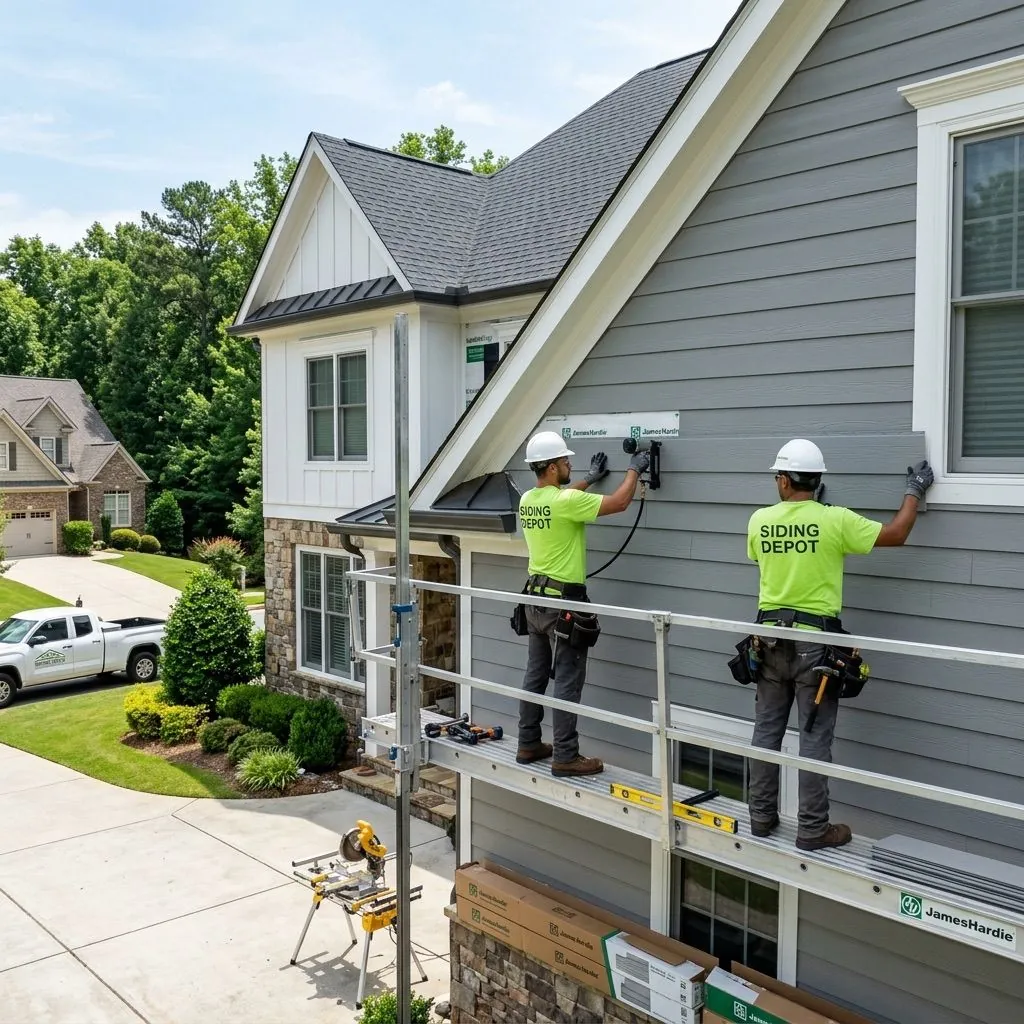
One factor tips more decisions than homeowners expect: installation. Both products only perform as well as the crew that installs them, and both carry manufacturer warranties that depend on correct, to-spec work. A premium material installed poorly can underperform a budget material installed well. So once you have chosen a material, the next decision — who installs it — matters just as much as the label on the board, which is exactly why we put the full scope and warranty in writing before any work begins. As a James Hardie Elite Contractor we install to protect the warranty, and GreenSky 0% APR plans are available for qualified homeowners.
Get a straight recommendation for your home. We’ll assess your exterior and quote the fiber cement option in writing — within 24 hours. Get my free quote Call (678) 400-2012
What fiber cement maintenance actually looks like
One fair knock on fiber cement is that it is not entirely maintenance-free — but the reality is gentler than the myth. James Hardie’s factory ColorPlus finish is engineered to hold color for many years before a repaint is even a conversation, and because the board itself does not absorb water, upkeep is mostly cosmetic: an occasional wash, and re-caulking or touch-ups over time. Painted (rather than factory-finished) Hardie will need repainting on a longer cycle than most homeowners expect, often a decade or more with a quality coating. Vinyl, by contrast, never needs paint because its color is molded through the panel — a genuine convenience — though a badly faded or cracked vinyl panel cannot be refreshed the way a painted surface can; it has to be replaced.
The honest summary: vinyl asks for less attention, fiber cement rewards a little attention with a much longer life. Which trade-off is right depends entirely on how long you intend to own the home and how much the exterior’s longevity matters to you.
Sources & Review Notes
- James Hardie — Hardie™ Zone System & HZ10 (accessed July 14, 2026)
- Cost, lifespan and fire characteristics summarized from market and manufacturer material; verify current figures before publication.
Frequently Asked Questions
Q.Is James Hardie or vinyl cheaper?
Vinyl is cheaper upfront, often around $2-$5 per square foot installed versus roughly $10-$15 for James Hardie. The gap narrows over time because of lifespan and resale.
Q.Which lasts longer?
Fiber cement commonly lasts 30-50+ years; vinyl typically lasts 20-40 and can warp or fade in intense heat. In Georgia's climate, Hardie's durability advantage is meaningful.
Q.Is James Hardie worth the extra cost?
For most North Atlanta homes, yes. It resists moisture, rot and pests, is non-combustible, and recoups a strong share of its cost at resale.
Q.Does vinyl hurt resale value?
At higher home values, vinyl can read as builder-grade and weigh on appraisal, while fiber cement signals a premium, maintained exterior.
Q.What about maintenance?
Vinyl cleans with a hose and never needs repainting because color is molded in. Painted Hardie is repainted periodically; factory ColorPlus finishes hold color for many years.
Q.Which is better for fire?
James Hardie fiber cement is non-combustible (Class A). Vinyl is combustible and can melt under high heat.
Q.Which should I choose for a Georgia home?
If longevity, moisture and fire resistance and resale matter most, Hardie usually wins. If lowest upfront cost is the priority, vinyl is the value pick.
Ready for Your Free Estimate?
Join 1,000+ happy Georgia homeowners. Professional measurement and detailed written proposal within 48 hours.