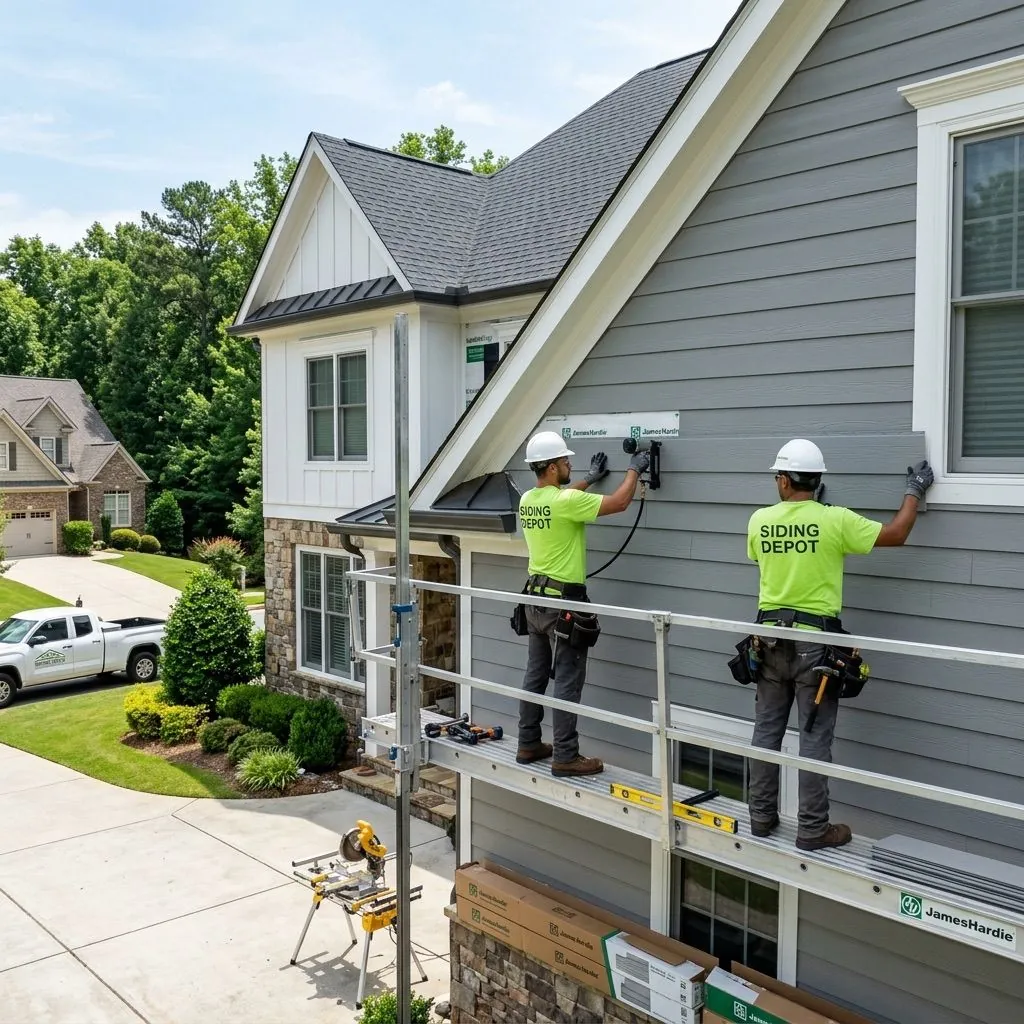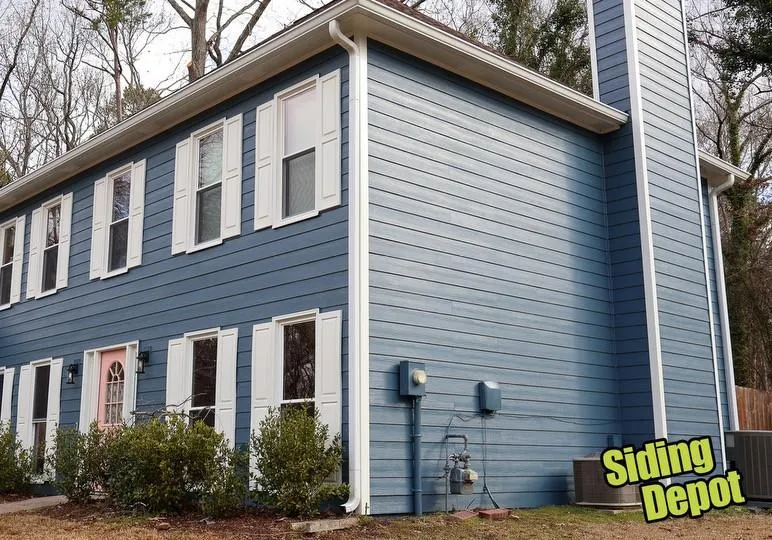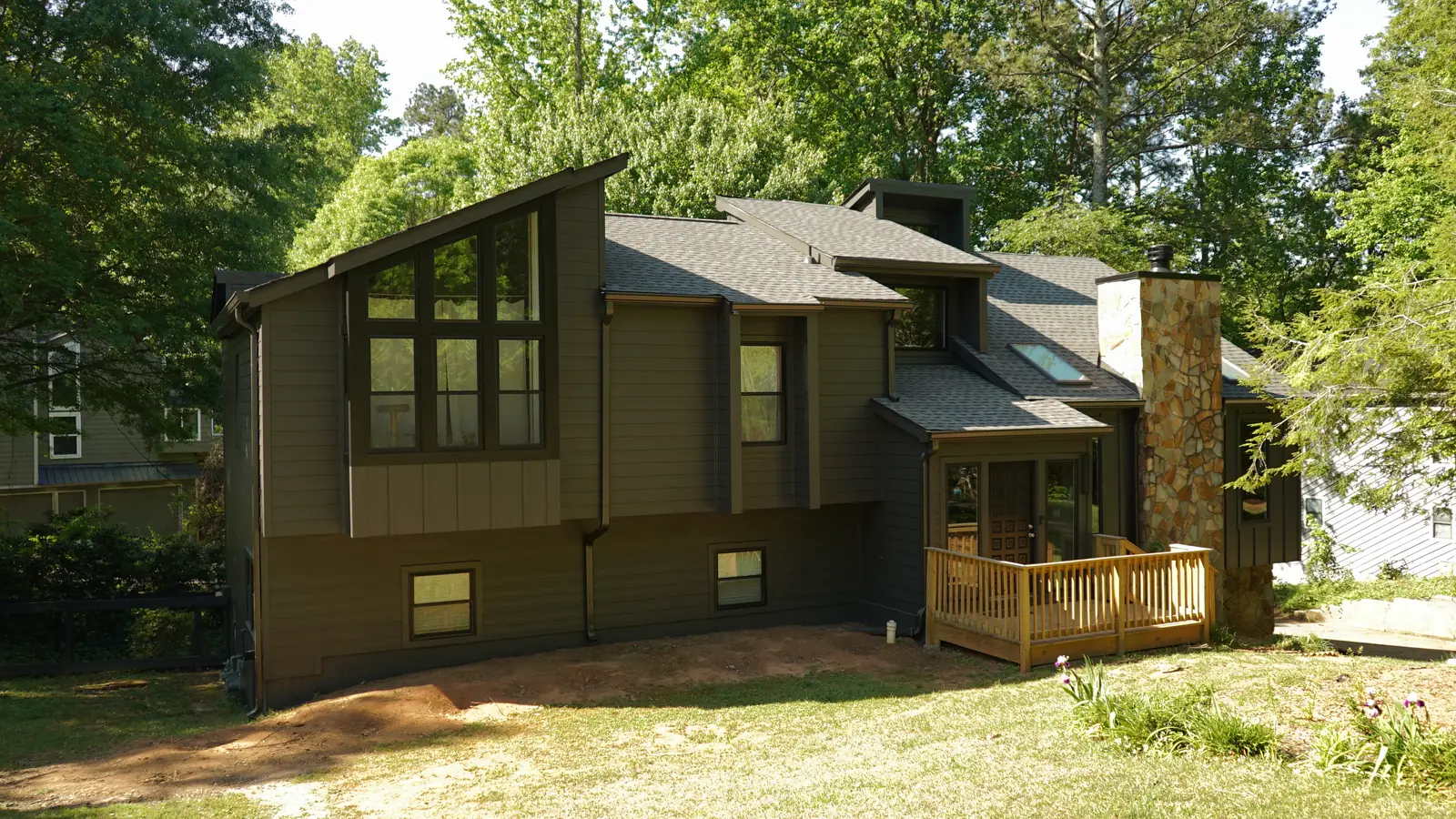
James Hardie vs. LP SmartSide in Georgia: which siding wins the climate?
Both are quality products, and their prices are close in 2026. The deciding factor for a North Atlanta home is how each one lives with heat, humidity and moisture over decades.
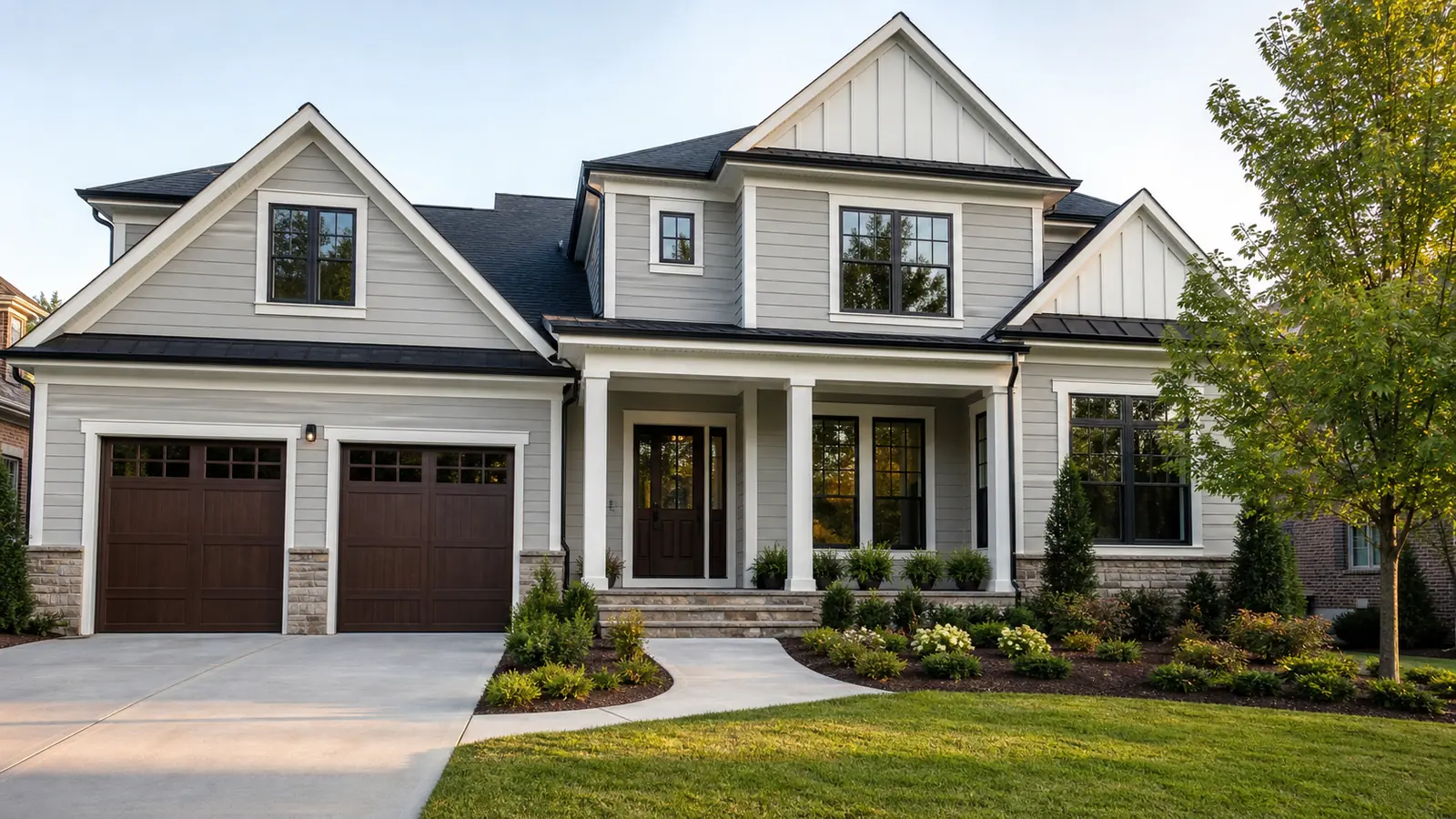
James Hardie vs. LP SmartSide: what they actually are
If you are replacing siding in North Atlanta, two names come up more than any others: James Hardie fiber cement and LP SmartSide engineered wood. Both are legitimate, widely installed products — and, unlike a few years ago, they now sit at nearly the same price point. So the honest question is not “which is cheaper,” it is “which one holds up better on your home, in this climate.” This comparison lays out the real trade-offs without pretending one product is perfect.
Want a recommendation for your specific home? Get a free assessment →
The two products are built from fundamentally different materials, and that is where every downstream difference begins. James Hardie is fiber cement — a blend of Portland cement, sand and cellulose fiber that is largely inorganic. LP SmartSide is engineered wood: real wood strands bonded with resins and waxes and treated with zinc borate through LP’s SmartGuard process. One is essentially a cement product; the other is a treated wood product. Both are engineered to resist the things that destroy old siding, but they resist them in different ways and to different degrees.
Not sure which material fits your home and budget? We’ll walk your exterior and give you a straight answer. Get my free assessment
| Factor | James Hardie (fiber cement) | LP SmartSide (engineered wood) |
|---|---|---|
| Core material | Cement, sand, cellulose — largely inorganic | Treated wood strands with resins |
| Moisture & rot | Very resistant; not a food source for pests | Treated to resist; still a wood-based product |
| Fire | Non-combustible (ASTM E136) | Combustible wood base |
| Dimensional stability | Holds shape in heat and humidity | Good, with proper installation |
| Weight & install | Heavier, more labor-intensive | Lighter, faster to install |
| Impact resistance | Good | Strong — handles impact well |
| 2026 price | Near parity | Near parity |
Why the Georgia climate tips the scale
Georgia is a moisture and heat state: summers above the mid-90s, humidity most of the year, heavy rainfall and an active storm season. That environment is exactly where a largely inorganic material has an edge. James Hardie’s fiber cement does not swell, rot or feed termites the way a wood-based product can if water ever gets past the finish, and it is non-combustible — a real consideration in the Southeast. Its HardieZone HZ10 line is specifically formulated for the humid heat of the South.
None of that makes LP SmartSide a bad product — it is genuinely good, and its lighter weight, easier installation and strong impact resistance are real advantages. But on a Georgia home where moisture is the number-one long-term enemy, the material that is least interested in absorbing water tends to win the decades-long argument.
Myth Engineered wood and fiber cement are basically the same once painted. Fact They behave differently over decades in humidity. The core material — wood vs. cement — is what determines how each ages.
Where LP SmartSide genuinely wins
An honest comparison has to name where the other product is stronger. LP SmartSide is lighter and faster to install, which can reduce labor on some projects. It handles impact well, resisting dents and dings that can chip harder materials. And its wood-grain texture appeals to homeowners who want a warmer, more traditional wood look. If those are your priorities — and the installer is excellent — SmartSide is a defensible choice.
We install to protect the warranty on whichever system fits your home. Ask us for a written, itemized comparison. Talk to a specialist
Maintenance and repainting over the years
Every exterior needs some upkeep; the question is how much and how often. James Hardie’s factory ColorPlus finish is engineered to hold color for many years before a repaint is due, and because the board itself does not absorb water, maintenance is mostly cosmetic. An engineered-wood product will also perform well when installed and finished correctly, but as a wood-based material it lives closer to the moisture question over time, which makes correct installation and finish maintenance especially important. Either way, the crew that installs it — and whether they follow the manufacturer’s specification — matters as much as the material you pick.
Resale, appraisal and curb appeal
In North Atlanta’s mid-to-upper price bands, siding is part of how a home is judged at appraisal and on the market. A premium, well-installed exterior signals a maintained home, while builder-grade or failing siding drags on perceived value. Both Hardie and SmartSide read as quality upgrades over old vinyl or damaged wood, so the resale conversation comes down to finish quality, color choice and the condition of the installation — another reason the installer is as important as the label on the board.
How to decide for your home
Instead of arguing brands, weigh the decision the way an installer does — by what your home and priorities actually demand.
Rank your priorities Moisture and fire resistance and longevity, or lower install cost and a wood-grain look? Your answer points to a material. Weigh the climate In humid, storm-prone North Atlanta, dimensional stability and rot resistance carry extra weight. Confirm the warranty and installer Whichever product you choose, the warranty depends on to-spec installation by a trained crew. Get it in writing Compare a written, itemized scope for each option — material, trim, finish and labor — not just a headline price.
For a deeper look at the fiber cement side of this decision, see our guide to planning a James Hardie project in Marietta and recent installations. As a James Hardie Elite Contractor, we’ll put every siding replacement option in writing.
Get a straight recommendation for your home. We’ll assess your exterior and give you a written, itemized quote for the system that actually fits — within 24 hours. Get my free quote Call (678) 400-2012
Sources & Review Notes
- James Hardie — Hardie™ Zone System & HZ10 (accessed July 14, 2026)
- Product characteristics summarized from manufacturer material; verify current specifications and warranties for both products before publication.
Frequently Asked Questions
Q.Is James Hardie better than LP SmartSide?
Neither wins universally. Hardie leads on moisture, fire and dimensional stability; LP SmartSide leads on weight, install speed and impact resistance. In Georgia's humid climate, Hardie's moisture and fire resistance often tip the balance.
Q.Which is cheaper in 2026?
They are close. LP raised prices while Hardie held steady, so the two are near price parity now, making performance rather than cost the deciding factor.
Q.Which lasts longer in the Georgia climate?
Because fiber cement is largely inorganic, it resists the moisture, rot and pest issues that most threaten a wood-based product over decades in a humid climate.
Q.Does either product need repainting?
Both can be refinished. James Hardie's factory ColorPlus finish is engineered to hold color for many years; any painted or engineered-wood surface will eventually need a repaint depending on exposure.
Q.Which is better for fire resistance?
James Hardie fiber cement is non-combustible under ASTM E136. LP SmartSide has a treated wood core, which is combustible.
Q.Which handles impact and hail better?
LP SmartSide's engineered-wood construction gives it strong impact resistance, an advantage in areas prone to hail and debris.
Q.Which product does Siding Depot install?
We install James Hardie as a James Hardie Elite Contractor and will give you an honest assessment of whether it is the right fit for your specific home.
Ready for Your Free Estimate?
Join 1,000+ happy Georgia homeowners. Professional measurement and detailed written proposal within 48 hours.